Top AWS Lambda Alternatives in 2025
 Eli Mernit
AWS Lambda is one of the most popular serverless cloud platforms, but it has some important limitations, ranging from cold start latency to a lack of GPU support. Today, there are a number of alternatives to AWS Lambda that offer better developer experience, more flexibility, and support for emerging needs like AI/ML workloads. In this article, we'll explore several alternatives, highlighting use-cases like AI/ML inference, fast cold boots, and developer experience.
1. Beam
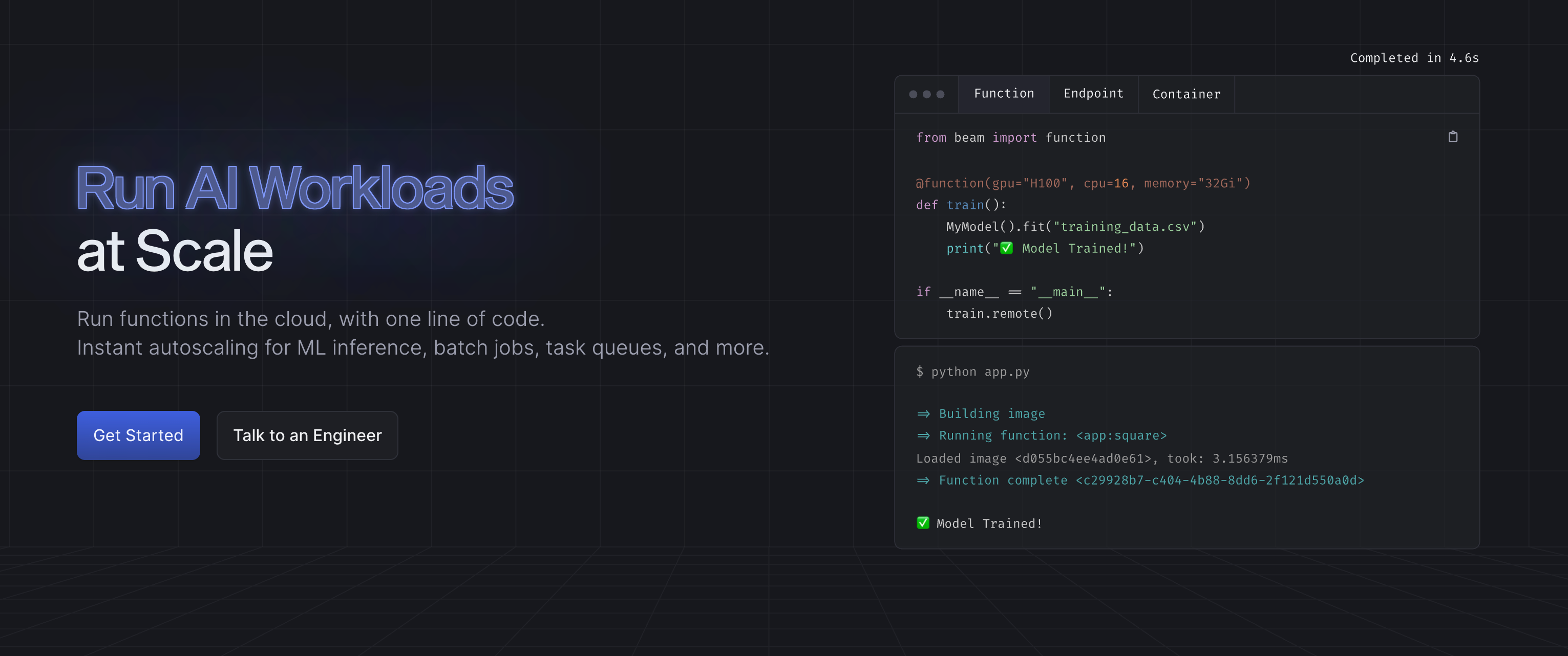
Overview: Beam is built for machine learning and data-heavy applications, offering serverless functions with GPU support. Because of its focus on AI/ML workloads, Beam is optimized for fast cold start of large container images. It is powered by an open-source container runtime, which makes it possible to boot very large (10-100Gi) images in a matter of seconds. In addition to serverless functions and web endpoints, Beam offers support for task queues, code sandboxes, and scheduled jobs.
Key Features and Benefits:
- Python-Native Developer Experience: Unlike other platforms, Beam requires no config files to use. You only need to interact with a Python SDK to deploy your code onto Beam's cloud.
- Easy Deployment for ML Models: Deploy ML models or custom code without building Docker images manually.
- Serverless GPU Acceleration: Supports GPUs from NVIDIA T4 to H100, with cold starts in under 1 second.
- Cost and Pricing: Per-second billing with free GPU hours for new users. Competitive hourly GPU pricing with scale-to-zero.
- GPU Autoscaling: Scales from zero to multiple GPU instances automatically.
Use Cases: Ideal for AI inference, batch processing, or GPU-heavy workloads that Lambda cannot handle. Great for startups needing to serve custom ML models efficiently.
2. Google Cloud Run
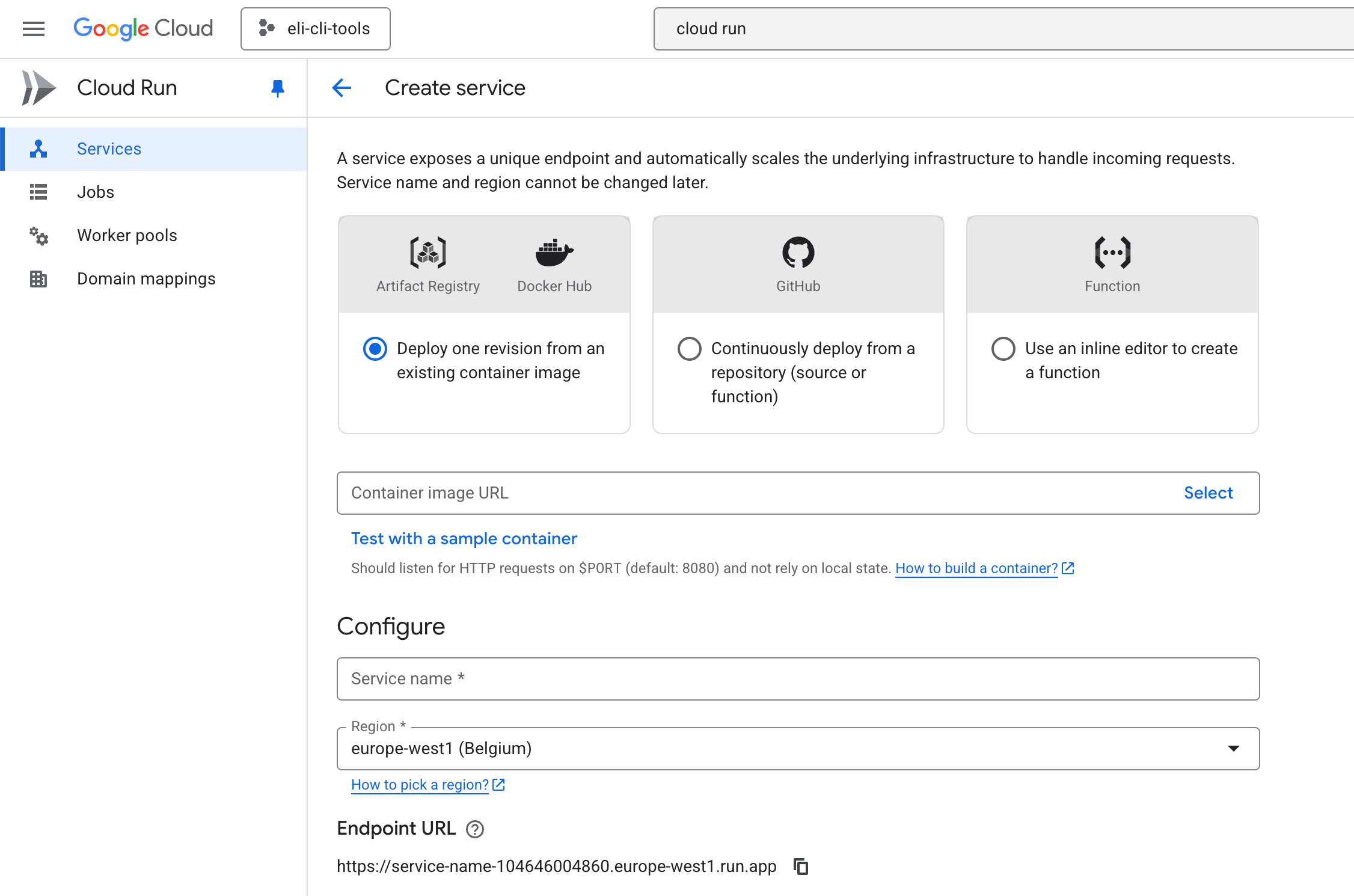
Overview: Cloud Run lets you deploy any container image (your own runtime, dependencies, language, etc.), then scales it per-request like Lambda. That means you aren’t locked into predefined runtimes or the short execution lifecycle of Lambda. You can run heavier workloads, long-running requests (up to 60 minutes vs. Lambda’s 15 minutes), and packages that don’t fit into Lambda’s environment.
Key Features and Benefits:
- Bring Your Own Container: Cloud Run lets you bring existing containers, so there's more flexibility for deploying an existing container image than Lambda.
- GPU Support: Cloud Run supports NVIDIA L4 GPUs for serverless AI inference, with per-second billing.
- Instant HTTP Endpoints: Cloud Run services are exposed over HTTPS by default, without requiring setup of API Gateway as a separate step.
- Longer Timeouts: AWS Lambda supports executions up to 15 minutes, but Cloud Run extends this up to 60 minutes for long-running jobs.
- Generous Free Tier: Cloud Run offers an always-free pool of CPU, memory, and network usage.
Use Cases: Ideal for developers building GPU apps who want to bring their own Docker container. Great for building REST APIs or scaling GPU-backed inference for AI products.
3. Microsoft Azure Functions
Overview: Azure Functions is Microsoft’s FaaS platform and a compelling Lambda alternative, especially in Microsoft-centric or enterprise environments. It integrates deeply with the Azure ecosystem and can also run on Kubernetes via KEDA, which gives it flexibility that most other FaaS platforms don’t offer.
Key Features and Benefits:
- Kubernetes Integration: Unlike Lambda or Cloud Functions, Azure Functions can run on any Kubernetes cluster through KEDA. This matters for enterprises that want hybrid or multi-cloud deployments, or prefer to keep everything inside their existing Kubernetes ecosystem.
- Flexible Plans: Consumption Plan offers pay-per-execution with cold starts, Premium Plan provides pre-warmed instances to eliminate cold starts, and Dedicated options run on reserved VMs.
- Azure-Native Monitoring and Tooling: Tight integration with Azure Monitor, Application Insights, and first-class support in Visual Studio and VS Code.
- Native HTTP & Orchestration: Built-in HTTP triggers and Durable Functions for stateful workflows and complex orchestrations.
Pricing: Similar to Lambda with a free monthly grant of 1 million requests and 400,000 GB-seconds. Premium plans charge for always-on instances but eliminate cold starts.
Use Cases: Best for enterprise users already on Azure, or for developers who want the flexibility of ejecting from the Microsoft Cloud and running a hybrid deployment on Kubernetes.
4. Cloudflare Workers
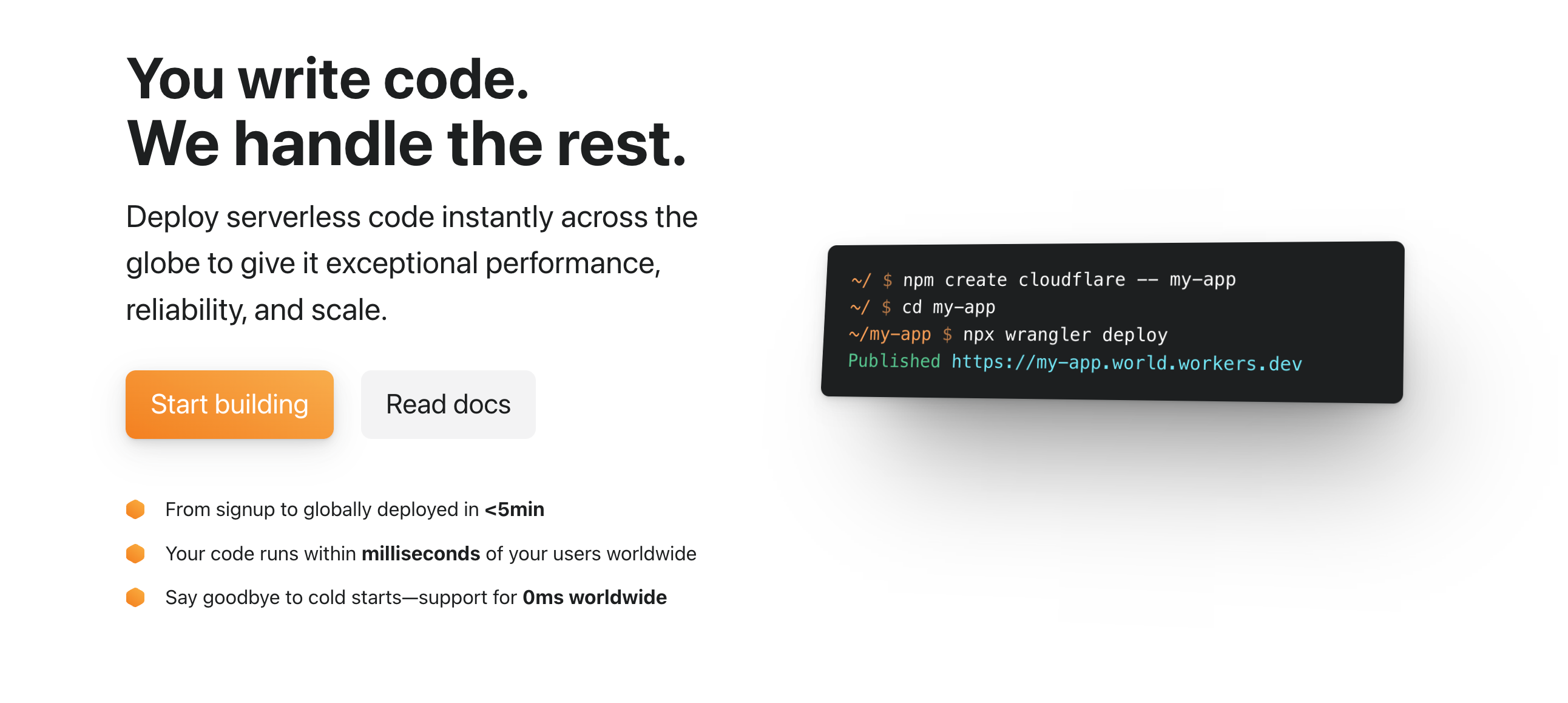
Overview: Cloudflare Workers runs code at the edge on Cloudflare’s global network. Functions are written in JavaScript/TypeScript (or compiled to WASM) and executed in lightweight V8 isolates, which provide very fast boot times.
Key Features and Benefits:
- Low-Latency Execution: Code is cached across all Cloudflare data centers, so requests will be served from the closest location to users.
- Fast Cold Starts: V8 isolates launch in milliseconds, lowering the typical startup lag of containers or VMs.
- Typescript-Focused Developer Experience: Deploy with the Wrangler CLI or dashboard, integrate with Cloudflare KV, Durable Objects, and the broader platform (R2 storage, D1 SQL, Queues, Hyperdrive).
Pricing: Free plan includes 100k requests/day. Bundled plan starts at $5 for 10M requests (with extra costs for storage/DB). Unbound plan charges per request + CPU time, supporting longer workloads.
Limitations: CPU time per request is capped (10ms on Bundled, up to 30s on Unbound). No GPU support.
Use Cases:
Ideal for Typescript-focused developers who prioritize low-latency and caching close to users.
5. DigitalOcean Functions
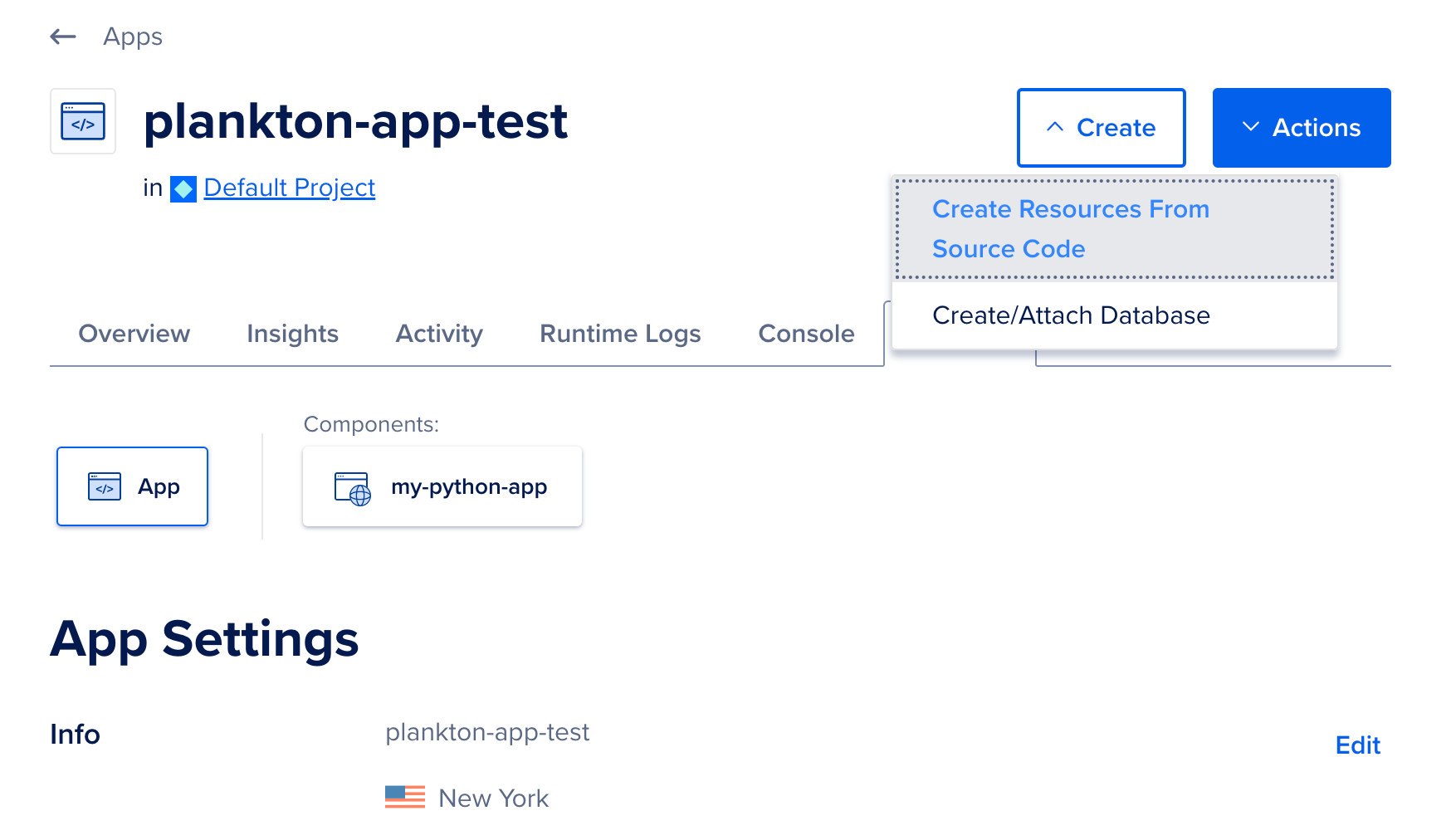
Overview: DigitalOcean Functions is a serverless platform built on Apache OpenWhisk. It’s designed for startups that want something easy to deploy without dealing with the complexity of AWS, but it’s not aimed at running workloads at massive scale.
Key Features and Benefits:
- Simple Developer Experience: Deploy with the
doctlCLI and minimal configuration, good for relatively simple apps or cron jobs. - Open Source and Self-Hostable: Built on Apache OpenWhisk, offering flexibility if you want to self-host.
- Predictable Pricing: Straightforward GB-second billing with a free tier. Costs are easy to reason about.
- DigitalOcean Ecosystem Integration: Connects with App Platform, Droplets, managed databases, and other DigitalOcean services.
Limitations:
Cold starts are slower than Beam, Cloudflare Workers or Lambda. Execution maxes out at 15 minutes, concurrency is limited, and there’s no GPU or edge distribution.
Use Cases:
Best for lightweight APIs, cron jobs, or backend tasks where simplicity and predictable costs matter more than scale or global performance.
Conclusion
There are several compelling alternatives to Lambda, but choosing a platform comes down to the use-case:
Support for Custom Container Images: Beam and Cloud Run specialize in bringing your own container image. In particular, Beam specializes in running your own container image with low latency cold boots.
Cold Boot Performance: For CPU workloads, Cloudflare Workers leads in low latency; for GPU workloads, Beam and Cloud Run offer specific optimizations for large AI/ML images.
Cost and Scale: Google Cloud Run and Cloudflare Workers have generous free tiers, and Beam bills per second with scale-to-zero and no subscription floor.
GPU and Specialized Workloads: Beam Cloud and Cloud Run are the two providers with support for GPU inference. Beam provides a wide range of GPUs, from 4090s to H100s, and Cloud Run provides access to the L4.
Python vs. Typescript Ecosystem: Cloudflare and DigitalOcean are designed for the Typescript/JS ecosystem, whereas Beam is focused on Python.
In 2025, the serverless ecosystem offers more variety than ever. By weighing pricing, performance, and capabilities, you can pick a platform that fits your needs better than AWS Lambda. Each of these five options brings a unique, developer-first take on serverless computing.